“My Child Understands Everything But Doesn’t Speak” — Here’s Why
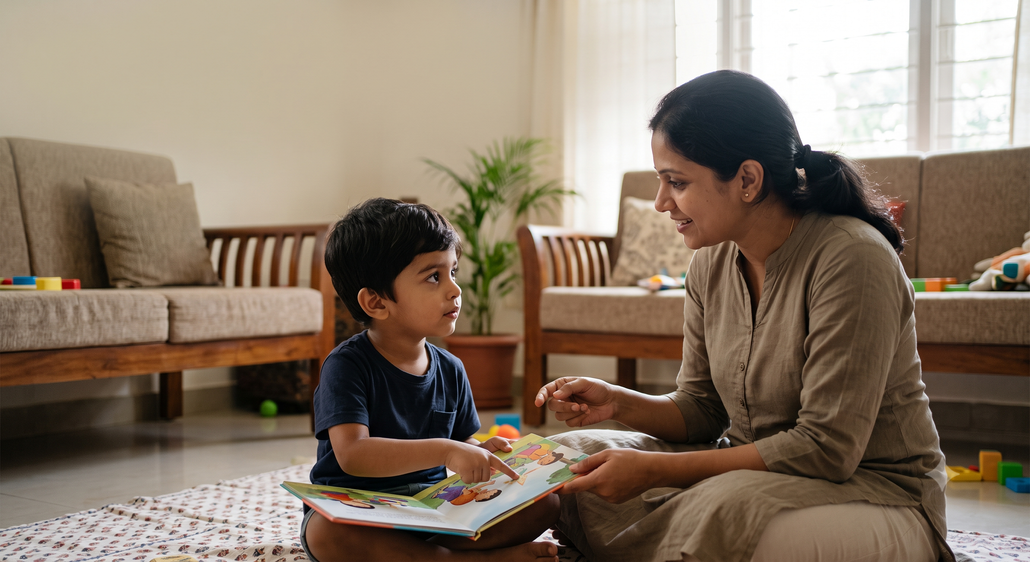
If you’re an Indian parent watching your toddler nod along, follow instructions, and even repeat words after you — yet stay silent when it’s their turn to talk — you’re not alone. This is one of the most common concerns speech therapists hear, and it usually comes in two forms: “My child understands everything I say, but doesn’t speak on their own,” and “My child repeats what I say, but never speaks spontaneously.” Let’s unpack both.
Why Understanding Doesn’t Always Lead to Speaking
Children don’t speak simply because they can — they speak because they want to. This is called intrinsic motivation. A child begins talking when they genuinely feel the need to communicate something, not because an adult keeps prompting “say it, say it.”
In the early stages, most first words are tied to basic needs — hunger, thirst, wanting a toy. But here’s the catch: many well-meaning parents anticipate every need before the child has to ask. Food appears before they point, water arrives before they gesture. Without a reason to communicate, there’s simply no opportunity for speech to develop.
Similarly, deliberately withholding a favourite toy or snack until the child “says the word” can backfire. Instead of encouraging speech, it often creates frustration and even an aversion to communicating altogether. The better approach is building natural opportunities during everyday play — letting curiosity and enjoyment (not pressure) invite the child to communicate.
Understanding vs. Speaking: Check the Real Gap
Often, when parents say their child “understands everything,” it’s worth asking: understands at what level, compared to their actual age? In many cases, a child’s receptive language (understanding) is also behind where it should be for their age — it just isn’t obvious because we largely communicate through gestures and routine, not truly testing word comprehension. The fix isn’t demanding more speech; it’s consistently exposing the child to rich vocabulary in context, without pressure, through joyful play and modelling.
Repeating Words Isn’t the Same as Meaningful Speech
If your child repeats what you say, that’s a positive developmental sign — but it isn’t yet meaningful speech. True meaningful speech has three markers: the child says the word spontaneously (without being prompted), uses it consistently, and correctly associates it with the right person or object (saying “Appa” only for their father, “paal” only for milk, for instance).
Don’t Delay — Early Help Changes Everything
Speech development is closely linked to social, emotional, and literacy skills. A delay in speech often signals delays elsewhere too. If you have any doubt about whether your child is meeting age-appropriate milestones, the most valuable step is a proper one-on-one evaluation with a qualified speech-language pathologist — early identification and early intervention offer lifelong benefits.
At Andhaadhi Rehab, our experienced, qualified speech therapists specialise in helping neurodivergent and speech-delayed children build real communication skills — both in person and through effective online therapy. If something feels off, don’t wait and watch — reach out to a speech therapist today.
Video Link: My child understands but doesn’t speak ! WHY? Explained by a Speech therapist


Leave a Reply
Want to join the discussion?Feel free to contribute!